



HALLMARKING
Precious metals such as silver and gold are rarely used in their purest form but are instead usually alloyed with other metals. This makes them more durable and easier to work with. Sterling silver, for example, usually bears the fineness of 925 - this means it contains 92.5% by weight of pure silver, and 7.5% of another metal alloy, usually copper.
However, it isn't possible to detect an article's precious metal content by sight or touch. Therefore, if an article is described as being made of or containing precious metals, it is a legal requirement in the UK for an Assay Office to hallmark them as such.
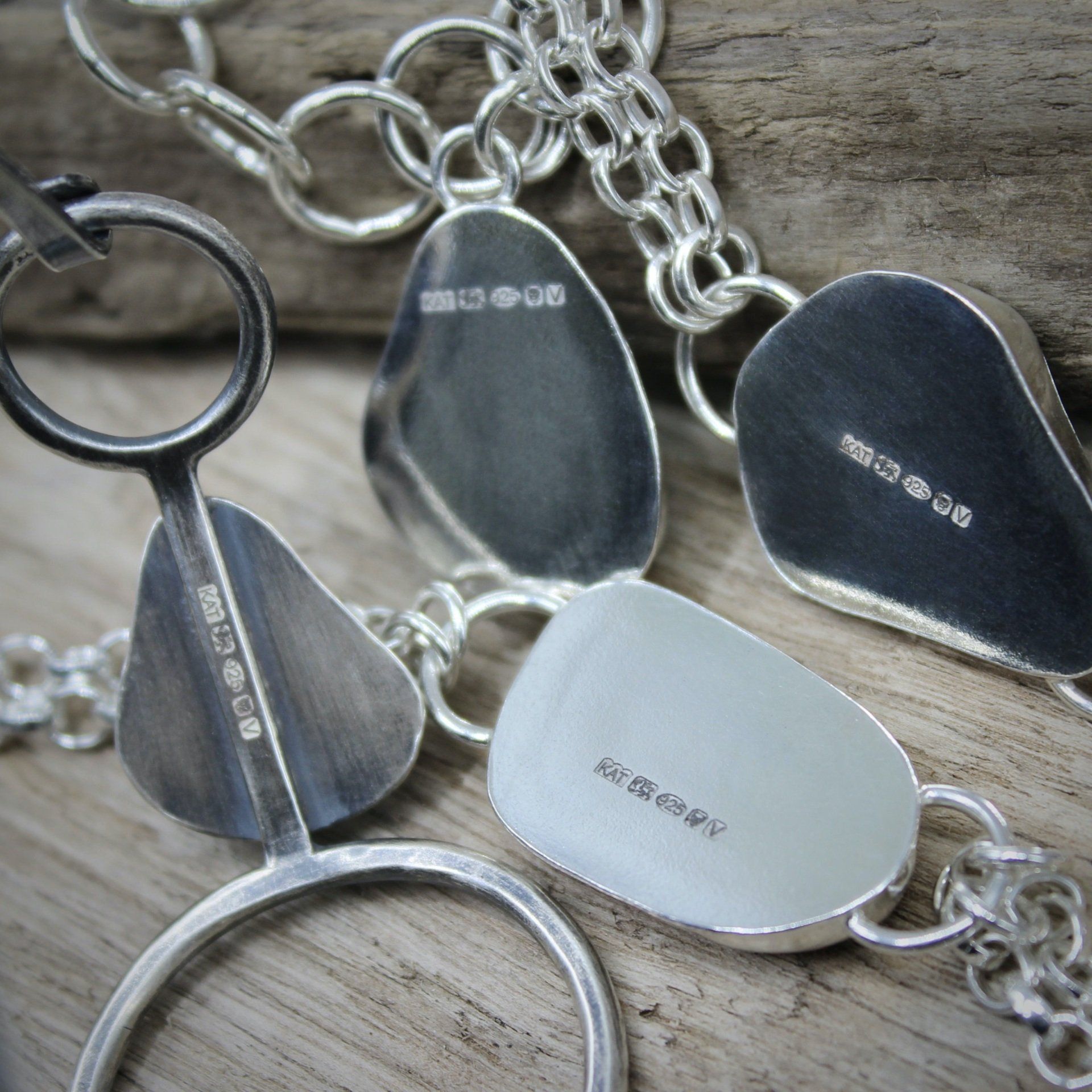
Hallmarks are marks applied to precious metals to indicate the amount of pure metal in the alloy. They were traditionally applied by striking with a punch, but are more commonly now applied using lasers.
There are four Assay Offices in the UK, based in London, Birmingham, Sheffield and Edinburgh.
I am registered for hallmarking with The Goldsmiths’ Company Assay Office in London, which began hallmarking in 1327 and is the oldest Assay Office in the UK.

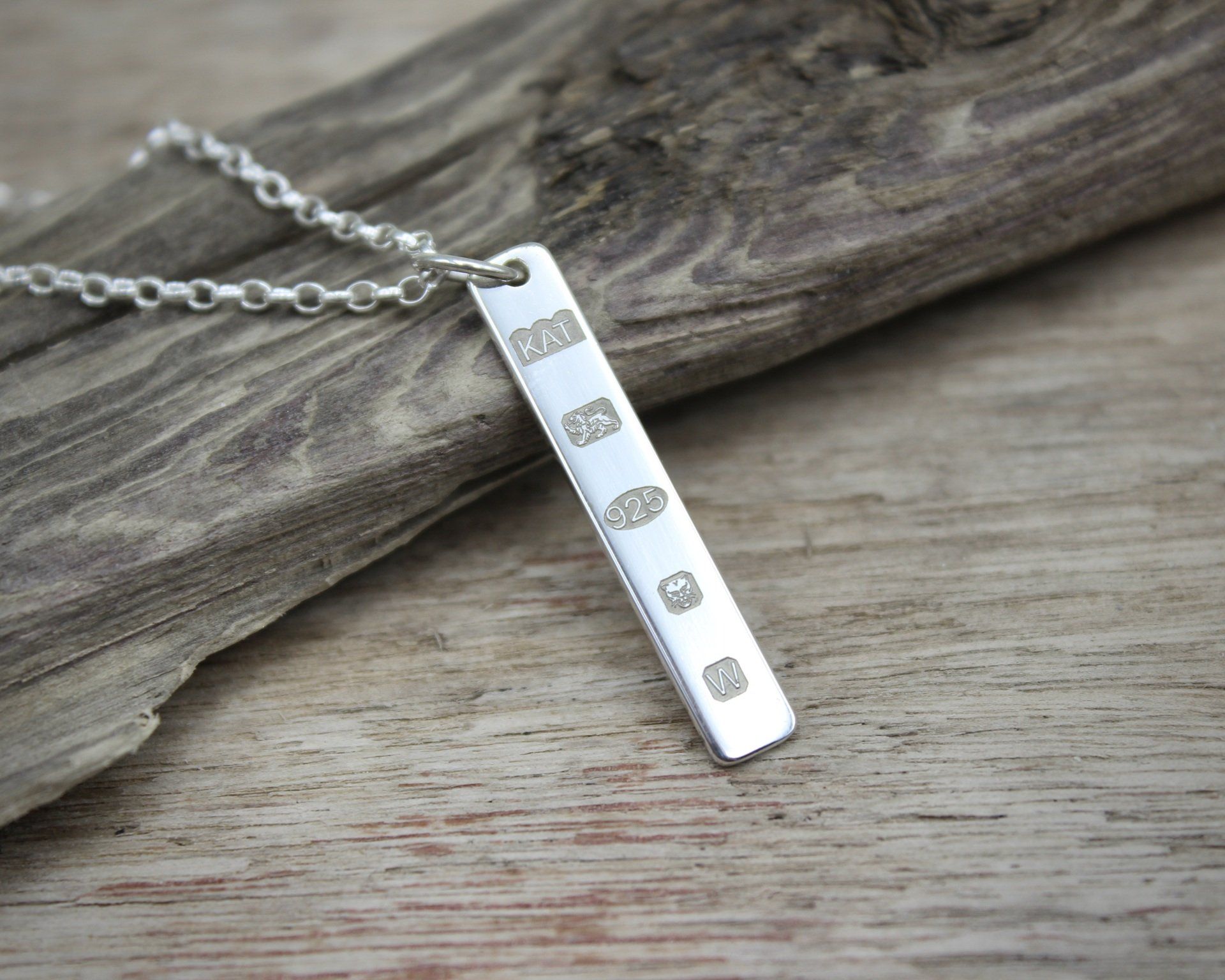
A hallmark is made up of a series of marks which are applied together to articles made from platinum, gold, palladium and silver.
These marks together mean that the article has been independently tested in order to guarantee it conforms to the legal standards of purity or 'fineness'. They also show where the hallmarking was done, what year it was marked, and who the sponsor or 'maker' is.
The first part of any hallmark is the maker or sponsor's mark, which is a series of between two and five letters in a designated 'shield' shape that is unique to each individual.
My own mark contains my initials KAT.

Not all my work will be hallmarked though; only those pieces which contain an amount of silver above a certain weight require a legal hallmark. For silver this is anything over 7.78g. For gold and palladium the value is 1g, and for platinum 0.5g.
Any pieces falling under that level do not require to be hallmarked, although often you will find metals stamped with the number '925' for Sterling Silver. This number alone does not constitute a legal hallmark though, and is no guarantee that the metal is of the purity claimed.
If you would like more information on hallmarking, you can find a copy of the Assay Office's Dealer Notice by clicking on the button below: